For a brand entering the smart lock market, choosing a manufacturing partner is only part of the decision. The manufacturing model matters just as much. Should you develop a product around your own design, or work with a manufacturer that already has product platforms and engineering resources?
This is the central difference between OEM and ODM smart lock manufacturing. Both models allow businesses to sell products under their own brand, but they involve different levels of design ownership, development responsibility, investment, and control.
OEM is generally a better fit when a brand already has product specifications or a distinct design. ODM is often more suitable when a brand wants to build a product range using an existing manufacturer's designs and development capabilities. The right choice depends on your market, technical resources, product roadmap, and expected order volume.
LOCSTAR has been involved in electronic lock manufacturing since 1998. Based in Longgang, Shenzhen, the company reports a 10,000 m² production base and manufacturing processes covering R&D, molding, punching, assembly, testing, and logistics. Its product portfolio serves hotel, apartment, residential, and commercial applications.
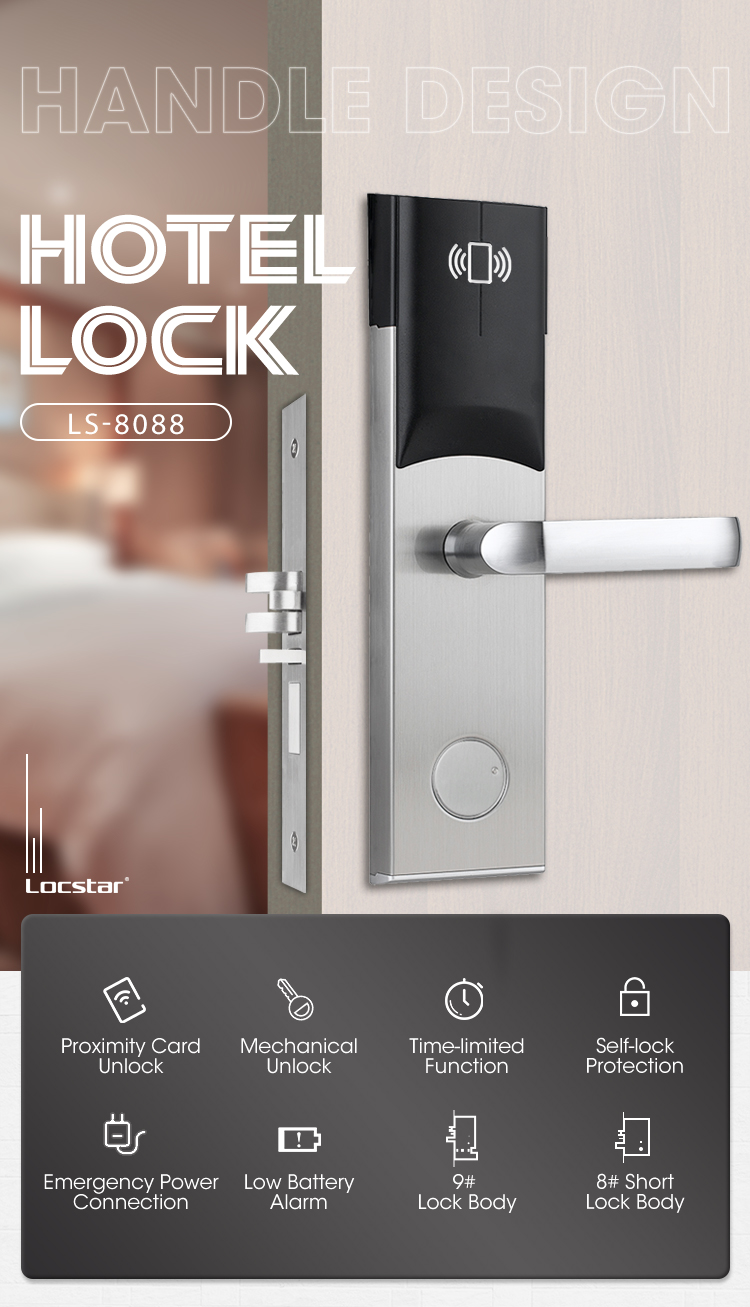
LOCSTAR electronic hotel lock — LS-8088 product example.
What Is the Difference Between OEM and ODM Smart Locks?
OEM stands for Original Equipment Manufacturer. In an OEM arrangement, the buyer provides the product design, technical specifications, or a detailed set of requirements. The manufacturer produces the smart locks according to the agreed specifications.
ODM stands for Original Design Manufacturer. In an ODM arrangement, the manufacturer provides an existing product design or develops a product platform that the buyer can market under its own brand. Depending on the agreement, the buyer may customize the logo, finish, packaging, selected functions, or other product details.
In practice, the boundary is not always absolute. Some projects combine an existing ODM platform with OEM-level modifications. The important point is to define exactly which parts are standard, which parts can be customized, and who owns the resulting design or tooling.
| Comparison | OEM Smart Lock | ODM Smart Lock |
|---|---|---|
| Product design | Based on the buyer's design or specifications | Based on the manufacturer's existing or developed design |
| Development responsibility | Buyer usually defines more of the technical requirements | Manufacturer usually contributes more design and engineering resources |
| Customization | Can involve deeper product-specific changes | Often starts with branding and agreed modifications to an existing platform |
| Initial investment | May be higher if new tooling, engineering, or testing is required | May be lower when an existing product platform can be used |
| Time to market | Depends on design maturity and development scope | Can be shorter when the selected product is already developed |
| Best suited for | Established brands with specific product requirements | New brands, distributors, and businesses testing a market |
These are typical differences, not fixed rules. Actual responsibilities, costs, development timelines, and intellectual property arrangements should be confirmed in the manufacturing agreement.
When Should Your Brand Choose OEM Smart Lock Manufacturing?
OEM smart lock manufacturing is worth considering when your brand has a clear product concept and needs a manufacturer to turn that concept into a production-ready product.
This model can be appropriate for established lock brands, security technology companies, and distributors with a defined product strategy. For example, a brand may require a particular exterior design, handle structure, locking mechanism, access method, electronic configuration, or compatibility requirement that is not available in a standard product.
OEM cooperation may also make sense when product differentiation is central to your business. If competing products look similar, a distinctive design or carefully specified feature set can help your brand build a recognizable position.
Before starting an OEM project, prepare clear technical information. This may include:
- Product drawings, dimensions, and material requirements.
- Lock body, mortise, cylinder, and door compatibility requirements.
- Required unlocking methods, such as fingerprint, PIN code, RFID card, or mobile access.
- Electronic components, communication protocols, and software requirements.
- Target-market certification and compliance requirements.
- Packaging, branding, labeling, and user manual specifications.
A manufacturer should review these requirements before confirming feasibility, sample development, tooling, and production arrangements. Not every requested function can be added to every lock platform without affecting structure, cost, power consumption, or product testing.
Brands developing residential products can review LOCSTAR's smart lock product range to understand the types of electronic lock products available for different applications.
When Is ODM Smart Lock Manufacturing the Better Option?
ODM smart lock manufacturing is often a practical route for businesses that want to launch a branded product without managing every stage of product design and development themselves.
For a new brand, importer, wholesaler, or regional distributor, developing a completely new smart lock may require substantial engineering coordination, tooling investment, testing, and project management. An existing ODM product platform can reduce some of that work.
Depending on the manufacturer's available options, an ODM project may include:
- Adding the buyer's logo to the lock or product components.
- Selecting available colors, finishes, or handle styles.
- Customizing retail packaging and printed materials.
- Selecting supported unlocking methods or product configurations.
- Adapting product documentation for the target market.
For example, a distributor entering the hotel market may prefer to start with an existing RFID hotel lock platform rather than develop a new lock from the beginning. LOCSTAR's RFID hotel lock collection provides a relevant product category to evaluate for hotel-related projects.
ODM does not mean that every product can be customized without limits. The available changes depend on the model, component design, software architecture, production process, and order requirements. Ask the manufacturer to identify standard features and optional changes separately.
OEM vs ODM: Which Model Offers Better Cost Control?
There is no universal answer to which model is cheaper. The total cost depends on how much development work is required, how many units will be ordered, and how much customization the project involves.
OEM projects may involve additional expenses for engineering, prototype development, molds, tooling, product testing, and design revisions. These costs can be justified when the brand needs a distinctive product or wants greater control over the specifications.
ODM projects may reduce initial development costs when the manufacturer already has a suitable product platform. However, branding, packaging changes, software adjustments, certification work, and other modifications can still affect the final quotation.
When comparing quotations, look beyond the unit price. Ask suppliers to separate the following cost items:
- Product unit price and included components.
- Sample and prototype charges.
- Tooling, mold, and engineering fees.
- Logo, finish, and packaging customization costs.
- Software configuration or integration costs.
- Testing, certification, and documentation costs.
- Spare parts, warranty, and after-sales support.
A low unit price may not represent the lowest project cost if important accessories, software work, or customization expenses are excluded. Request a complete quotation based on the same product configuration so that different manufacturers can be compared fairly.
Product Customization: What Can Be Changed in a Smart Lock?
Smart lock customization can involve much more than adding a logo. It may affect the product's appearance, mechanical structure, electronic functions, software, and packaging.
However, the level of customization varies by product model. A logo or packaging change is usually different in scope from changing a lock body, electronic board, communication protocol, or access-control function.
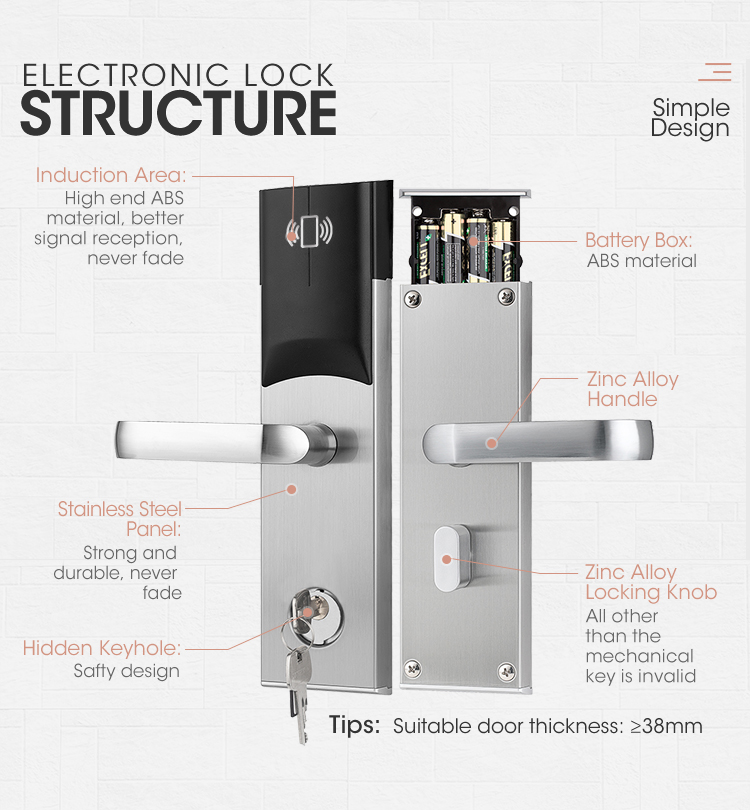
A closer look at the electronic and mechanical structure of a LOCSTAR hotel lock.
For a more useful discussion with a manufacturer, divide your requirements into several areas:
| Customization area | Examples of requirements | What to confirm |
|---|---|---|
| Appearance | Logo, color, finish, handle design | Available finishes, artwork, and sample approval |
| Mechanical structure | Lock body, mortise, dimensions, door thickness | Compatibility, tooling, and installation requirements |
| Access functions | Fingerprint, PIN, RFID card, mobile access | Supported functions for the selected model |
| Software and connectivity | Apps, management software, integrations | Protocol support, API availability, and integration scope |
| Brand materials | Packaging, manuals, labels, cards | Artwork files, language versions, and order quantities |
For hotel projects, the lock itself may be only one part of the required system. Buyers should also consider the supporting products needed for daily operation, such as RFID cards, encoders, energy savers, and access-control equipment. LOCSTAR's hotel lock encoder products are one example of the supporting equipment that may need to be considered when planning a hotel locking system.
Why Manufacturing Capability Matters More Than the OEM or ODM Label
The terms OEM and ODM describe cooperation models. They do not, by themselves, prove that a supplier has the engineering resources, production capability, or quality management needed for a reliable smart lock project.
Before choosing a partner, find out which parts of the manufacturing process the company handles directly and which parts are outsourced. This is particularly important for electronic locks, where mechanical components, circuit boards, firmware, assembly, and functional testing all affect the final product.
LOCSTAR's published company information describes a manufacturing operation in Longgang, Shenzhen, with a 10,000 m² production base and approximately 300 employees. Its stated production processes include research and development, molding, punching, assembly, testing, and logistics. The company also reports serving more than 10,000 hotel clients and exporting products to more than 50 countries and regions.
These details provide useful starting points for supplier evaluation. Buyers should still request current, project-specific evidence, such as product samples, inspection procedures, relevant certificates, and production information for the models under consideration.
You can learn more about the company's background and manufacturing operations on the LOCSTAR manufacturer profile.
How to Evaluate an OEM or ODM Smart Lock Manufacturer
A suitable manufacturing partner should be able to explain not only what it can produce, but also how it will manage the project from specification review to delivery.
Use the following questions when comparing potential suppliers:
- Product development: Does the manufacturer have an engineering team that can review your requirements and identify technical limitations?
- Production: Can it explain its manufacturing processes and the production capacity relevant to your order?
- Quality control: What inspections are performed during component production, assembly, and final testing?
- Customization: Which changes are available for the selected model, and which require new tooling or development?
- Certification: Can the supplier provide valid documents for the exact product model and target market?
- Intellectual property: Who owns custom drawings, molds, firmware changes, and newly developed designs?
- Technical support: What documentation, troubleshooting, and after-sales support are available?
- Supply continuity: How are spare parts, product revisions, and future repeat orders managed?
It is also important to agree on a written product specification before mass production. The specification should identify the approved sample, materials, dimensions, electronic functions, packaging, inspection criteria, and any permitted production tolerances.
OEM and ODM Smart Lock Manufacturing for Different Business Types
The best manufacturing model often depends on the buyer's business stage and internal capabilities.
| Business type | Potentially suitable model | Reason |
|---|---|---|
| New smart lock brand | ODM or combined ODM/OEM | Can start with an existing platform and develop differentiation over time |
| Established security brand | OEM or customized ODM | May already have technical specifications and established product positioning |
| Importer or wholesaler | ODM | Can focus on market coverage, branding, and distribution |
| Hotel solution provider | ODM or project-based OEM | Product configuration may need to match property and system requirements |
| Large-scale project buyer | OEM or customized ODM | May require specific hardware, software, and installation compatibility |
These recommendations are starting points rather than strict rules. A distributor may need OEM-level modifications, while an established brand may choose ODM for a new product category. The manufacturing agreement should reflect the actual scope of work, not just the label used for the cooperation.
Why Consider LOCSTAR for Your Smart Lock OEM or ODM Project?
Choosing a smart lock manufacturer involves more than finding a factory that can add a logo to a product. A long-term partner should understand the relationship between product design, mechanical engineering, electronic functions, production quality, and the needs of the target market.
LOCSTAR has worked in the electronic lock industry since 1998 and provides products and solutions for hotels, apartments, offices, and other facilities. Its published manufacturing information includes R&D, molding, punching, assembly, testing, and logistics operations at its Shenzhen production base.
Its product portfolio covers residential smart locks, fingerprint and face-recognition products, RFID hotel locks, and related hotel access equipment. This range can help buyers assess different product directions within one manufacturer's portfolio.
For example, brands exploring hotel applications can review the LOCSTAR hotel lock solution to understand the wider equipment and system considerations involved in hotel access management.
LOCSTAR's OEM/ODM cooperation options should be discussed against the specific model and project requirements. Buyers should confirm available customization items, minimum order quantities, development costs, sample procedures, lead times, and intellectual property terms directly with the company.
How to Start an OEM or ODM Smart Lock Project with LOCSTAR
A clear project brief helps the manufacturer recommend a suitable product and prepare a more accurate quotation. Before making an inquiry, organize the following information:
- Target market: Country or region where the products will be sold or installed.
- Business type: Brand owner, distributor, importer, wholesaler, hotel operator, or project contractor.
- Product category: Residential smart lock, RFID hotel lock, fingerprint lock, or another product type.
- Customization scope: Logo, color, finish, packaging, mechanical design, or electronic functions.
- Estimated quantity: Initial order quantity and expected repeat-order volume.
- Technical requirements: Door dimensions, unlocking methods, software, connectivity, and system compatibility.
- Commercial requirements: Target price range, delivery destination, and expected launch schedule.
With this information, the manufacturer can assess whether an existing ODM product is suitable, whether modifications are needed, or whether a more customized OEM development project should be considered.
To discuss your requirements, visit the LOCSTAR contact page and share your product category, target market, estimated quantity, and customization expectations.
Frequently Asked Questions About OEM and ODM Smart Locks
What is the main difference between OEM and ODM smart locks?
OEM smart locks are manufactured according to the buyer's design or technical specifications. ODM smart locks are based on designs or product platforms provided by the manufacturer, which the buyer may customize and sell under its own brand.
Is OEM or ODM better for a new smart lock brand?
ODM is often a practical starting point for a new brand because it can use an existing product platform and reduce the amount of product development the buyer needs to manage. OEM may be more suitable when the brand already has detailed product designs or needs substantial differentiation.
Can I put my own logo on an ODM smart lock?
Many ODM projects support private-label branding, such as logo placement and customized packaging. The available options depend on the manufacturer's product range, production process, and order requirements. Confirm the details before approving a sample.
Can an ODM smart lock be customized in appearance and functions?
Some ODM products allow changes to finishes, colors, handles, packaging, and selected functions. More extensive changes to the mechanical structure, electronic components, or software may require additional engineering work and testing.
Does OEM smart lock manufacturing always cost more than ODM?
Not always. OEM projects may involve additional design, tooling, and testing expenses, while ODM projects may use existing designs. The final cost depends on the product, order quantity, customization scope, and other project requirements.
Who owns the product design in an OEM or ODM project?
Ownership depends on the contract and the origin of the design. Buyers should clearly define ownership and usage rights for existing designs, custom drawings, molds, firmware changes, and newly developed components before production begins.
What information should I provide when requesting an OEM or ODM quotation?
Provide your target market, product category, estimated quantity, required functions, door specifications, branding requirements, packaging needs, and any software or certification requirements. Detailed information helps the manufacturer evaluate feasibility and prepare a more accurate quotation.
Does LOCSTAR provide OEM and ODM smart lock manufacturing?
LOCSTAR presents itself as an OEM/ODM electronic lock manufacturer and provides smart lock products and solutions for international markets. The specific customization options, MOQ, development scope, and commercial terms should be confirmed with LOCSTAR for the selected product and project.
What types of smart locks can I discuss with LOCSTAR?
LOCSTAR's published product range includes residential smart door locks, fingerprint and face-recognition products, RFID hotel locks, and related hotel access equipment. Product suitability and available configurations depend on the intended application.
How do I choose between an existing ODM product and a custom OEM design?
Choose an existing ODM product when its design and functions already meet your market requirements and you mainly need branding or limited modifications. Consider OEM development when your product specifications, mechanical structure, electronic functions, or brand differentiation require more substantial customization.
Build Your Smart Lock Brand with the Right Manufacturing Model
OEM and ODM are not simply two different ways to place an order. They represent different approaches to product development, customization, investment, and control.
If your brand already has a defined product design and technical requirements, OEM manufacturing may provide the level of control you need. If you want to enter the market with an existing product platform and focus on branding and distribution, ODM may be a more efficient starting point.
The most suitable choice is the one that matches your product strategy, target customers, technical requirements, and long-term business plans.
LOCSTAR welcomes inquiries from international brands, distributors, importers, and project partners interested in smart lock manufacturing and customization. Share your project requirements to discuss suitable product options and possible OEM or ODM cooperation.